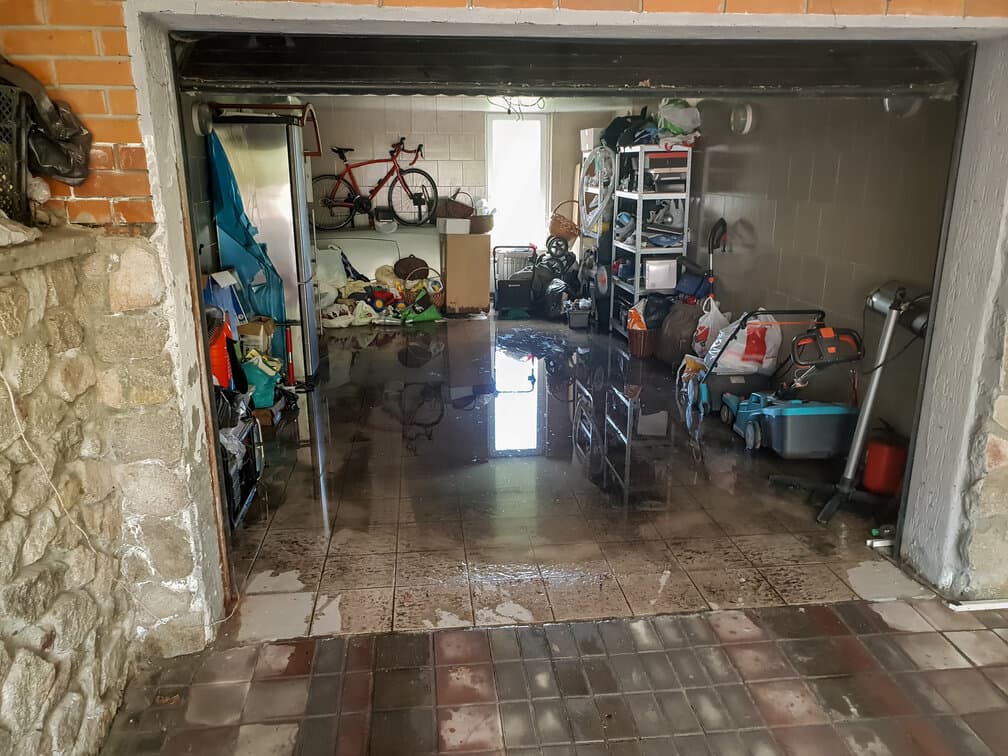

Water damage vs. flood damage comes down to one question your insurer will ask first: where did the water come from? Water that starts inside your home, or gets in through a storm-damaged roof, is usually a homeowners claim. Rising water from outside is flood, and Florida’s required Flood Disclosure states plainly that homeowners’ insurance policies do not include coverage for damage resulting from floods.
That single distinction decides which policy pays, which deductible applies, and whether you’re covered at all.
At a glance
- Source matters more than severity. A burst pipe and a storm surge can soak the same floor, but they fall under different policies.
- Homeowners policies exclude flood. Flood coverage comes from a separate policy, through the NFIP or a private insurer.
- Gradual leaks are their own problem. Many policies exclude long-term seepage even when the water came from inside.
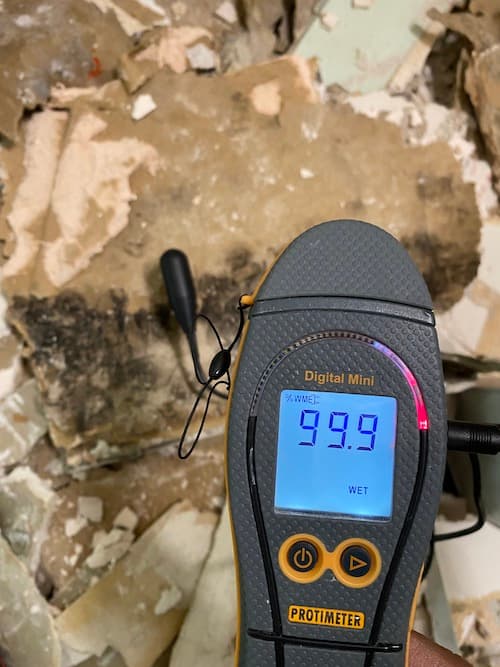
- Documentation decides gray areas. Photos, water lines, and moisture readings help show what caused each part of the damage.
The definitions that decide your claim
Insurers don’t use "flood" the way most people do. A burst pipe that leaves water across your kitchen feels like a flood, but in insurance terms it’s water damage.
What counts as a flood
The National Flood Insurance Program defines a flood as "a general and temporary condition of partial or complete inundation of 2 or more acres of normally dry land area or of 2 or more properties", at least one of which is the policyholder’s, from causes such as:
- Overflow of inland or tidal waters
- Unusual and rapid accumulation or runoff of surface waters from any source
- Mudflow
- Collapse or subsidence of land along a shore caused by erosion from abnormal waves or currents
The Florida Department of Financial Services notes this definition is the same whether your policy comes from the NFIP or the private market. Flooding of just one property generally isn’t a covered flood unless at least two acres are affected.
What counts as water damage
Water damage, in policy language, usually means water that starts inside or enters from above: a burst pipe, an overflowing appliance, a failed water heater, or rain coming through a storm-damaged roof. The key words insurers look for are sudden and accidental.
What homeowners insurance usually covers
Homeowners insurance usually covers water damage that is sudden and accidental. According to Policygenius, water damage from wind-driven rain, burst pipes, and vandalism is typically covered, while flood, sewage, gradual leaks, and neglect are not.
The exclusions that catch homeowners off guard
- Flood. Rising water from outside is excluded and needs a separate policy.
- Constant or repeated seepage or leakage. Many Florida policies exclude loss caused by "constant or repeated seepage or leakage of water" over a period of 14 or more days. In Hicks v. American Integrity Insurance Company of Florida, Florida’s Fifth District Court of Appeal held that this wording does not unambiguously exclude damage from the first 13 days of a leak.
- Sewer and drain backup. NerdWallet notes standard policies generally won’t cover sewer backups or sump pump failure unless you add a water backup endorsement.
- Wear and tear. Damage from a failure you could have maintained is usually excluded.
If water damage leads to mold, check your policy’s mold provisions, since mold coverage can be limited.
What flood insurance covers
Flood insurance covers direct physical damage from a flood as the policy defines it, and nothing more. Most Florida homeowners buy it through the National Flood Insurance Program (NFIP), though private flood policies are also available.
Key points from FloodSmart, the NFIP’s consumer site:
- Two separate coverages. Building coverage pays up to $250,000 for a home’s structure, and contents coverage pays up to $100,000 for belongings. They’re purchased separately and carry separate deductibles.
- A 30-day wait. New NFIP coverage generally takes effect 30 days after purchase, so buying it when a storm is forecast is usually too late.
- Real exclusions. The NFIP’s agent guidance lists damage that could have been avoided, living and financial costs, outdoor property, some valuables, and most vehicles among the things not covered.
The NFIP’s status matters too. The Congressional Research Service reports it is authorized until December 11, 2026, and during a lapse, the National Association of Realtors explains, it cannot issue new or renewal policies.
The gray areas: hurricanes, sewer backups, and deductibles
The hardest claims are the ones where water arrives several ways at once. That’s common in Florida.
Wind-driven rain vs. storm surge
In a hurricane, rain entering through a wind-torn roof opening is generally a homeowners or windstorm claim, while storm surge and rising water are flood. When both hit one home, adjusters often separate the damage by the visible water line, so photos taken before cleanup matter.
The hurricane deductible
Wind claims from a named hurricane carry a separate deductible. Under section 627.701, Florida Statutes, insurers must offer alternative hurricane deductible amounts equal to $500, 2 percent, 5 percent, and 10 percent of the policy dwelling limits, unless the specific percentage deductible is less than $500. The Florida Department of Financial Services explains that it applies on an annual basis to all covered hurricane losses during the calendar year. A 2 percent deductible on a $400,000 dwelling limit is $8,000.
Sewer backup during a flood
A sewer backup on a dry day needs a water backup endorsement. During a flood, it may fall under flood coverage instead: the NFIP excludes sewer or drain backup damage unless a flood in the area caused the backup.
Side-by-side comparison
This is how insurers separate water damage from flood damage, factor by factor:
- Typical source. Water damage: burst pipe, failed appliance, storm-damaged roof. Flood damage: storm surge, overflowing waterways, rapid runoff.
- Where water starts. Water damage: inside the home or from above. Flood damage: outside, at ground level.
- Policy that responds. Water damage: homeowners policy. Flood damage: separate flood policy (NFIP or private).
- Coverage test. Water damage: sudden and accidental. Flood damage: inundation of 2+ acres or 2+ properties.
- Deductible. Water damage: standard, or hurricane deductible for named storms. Flood damage: separate building and contents deductibles.
- Waiting period. Water damage: none once the policy is active. Flood damage: generally 30 days for new NFIP policies.
- Common exclusions. Water damage: gradual seepage, wear and tear, sewer backup without endorsement. Flood damage: avoidable damage, living costs, outdoor property.
- Typical water category. Water damage: often Category 1 (clean) at first. Flood damage: often Category 3 (contaminated), per the three water damage categories.
How to protect your claim in Florida
The way you document and report water damage often decides which policy pays. Follow these steps:
- 1Photograph the source and the water line first. A burst fitting, roof hole, or muddy wall line shows where the water came from.
- 2Stop the damage from spreading. Start extraction and drying, and keep every receipt.
- 3Notify every insurer that may apply, including both homeowners and flood carriers if wind and flood both played a role.
- 4Mind the deadlines. Under section 627.70132, Florida Statutes, a claim is barred unless notice is given within 1 year after the date of loss, and a supplemental claim within 18 months. Section 627.70131, Florida Statutes requires insurers to acknowledge claim communications within 7 calendar days.
- 5Keep evidence until the adjuster sees it, or photograph anything you must discard for health reasons.
- 6Get professional moisture documentation. Readings, drying logs, and the IICRC water category help show cause and extent.
- 7Vet your contractor. Under section 489.147, Florida Statutes, it is insurance fraud punishable as a felony of the third degree for a contractor to knowingly pay, waive, or rebate your deductible. For policies issued on or after January 1, 2023, section 627.7152, Florida Statutes no longer allows assignment agreements.
Swift Restoration’s water damage restoration team documents every job to support your claim and bills insurers directly on covered losses.
This section is general information, not legal or insurance advice.
Know your water before you file
When it comes to water damage vs. flood damage, the source decides which policy pays, which deductible applies, and which exclusions matter. Review both policies before storm season and document the source before cleanup starts.
If water is already in your Florida home, Swift Restoration can extract, dry, and document the damage the way insurers expect to see it. Request a free visual assessment or call us, 24/7.
Frequently asked questions
Is a burst pipe considered flood damage?+
No. A burst pipe is water damage, even if it leaves standing water across several rooms. Because it starts inside the home and happens suddenly, it’s typically handled under your homeowners policy, subject to your standard deductible.
Does homeowners insurance cover water damage from a hurricane?+
Partly. Rain that enters through a roof opening or broken window caused by wind is generally covered under your homeowners or windstorm policy, subject to the hurricane deductible. Storm surge and rising water are flood and need a separate flood policy.
Do I need flood insurance if I’m not in a high-risk flood zone?+
It’s worth considering. The NFIP notes that anywhere it can rain, it can flood, and your homeowners policy won’t cover flood damage. Remember the 30-day waiting period before new NFIP coverage takes effect.
What if my roof leaks during a storm without obvious damage?+
Many policies cover rain damage only when wind or hail first creates an opening. A roof that leaks because of age or worn flashing may be treated as a maintenance issue. Have a roofer document the cause before repairs start.
Does flood insurance cover mold?+
Flood insurance may cover mold damage caused by a flood, but the NFIP excludes damage that could have been avoided. Start drying right away, document what you did and when, and keep restoration records to show the mold wasn’t the result of delay.
Can my insurer deny a claim if I wait to report it?+
Late notice can hurt a claim. Florida law bars a claim unless notice is given within 1 year after the date of loss. Waiting also makes it harder to prove whether water or flood caused the damage.
Who decides whether damage is water or flood?+
The insurance adjuster makes the initial call based on the evidence. You can hire a licensed public adjuster to represent you. Under Florida law, a contractor may not interpret your policy or adjust your claim unless the contractor holds a public adjuster license.
Dealing with this right now?
Skip the reading. A live dispatcher answers 24/7 and the visual assessment is free, with no obligation.
(305) 733-4134