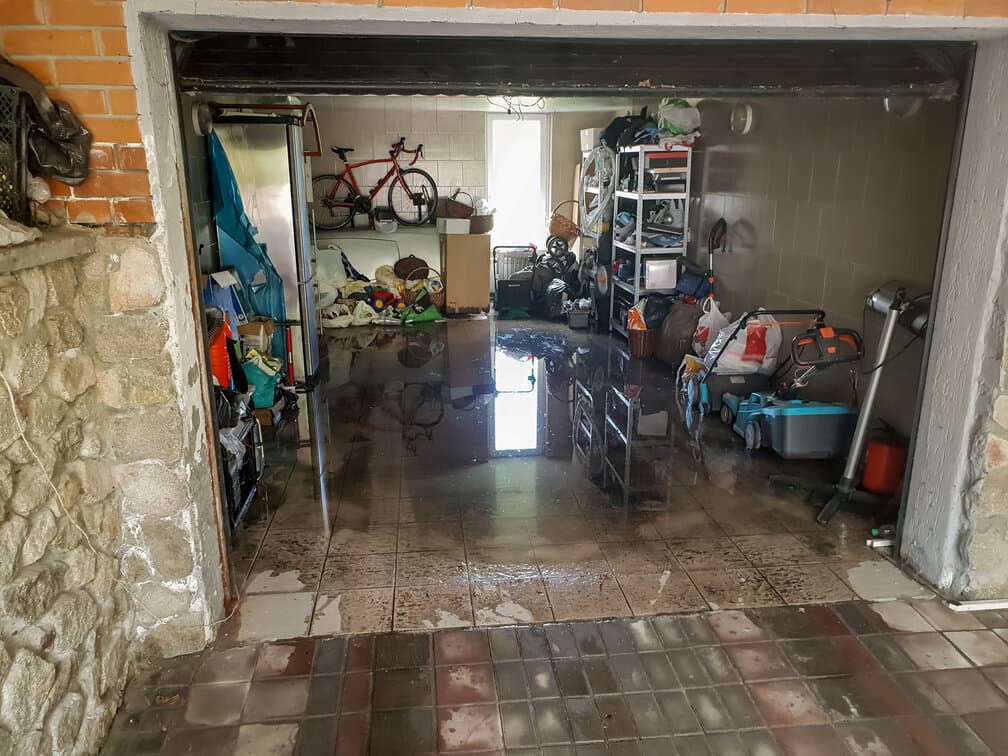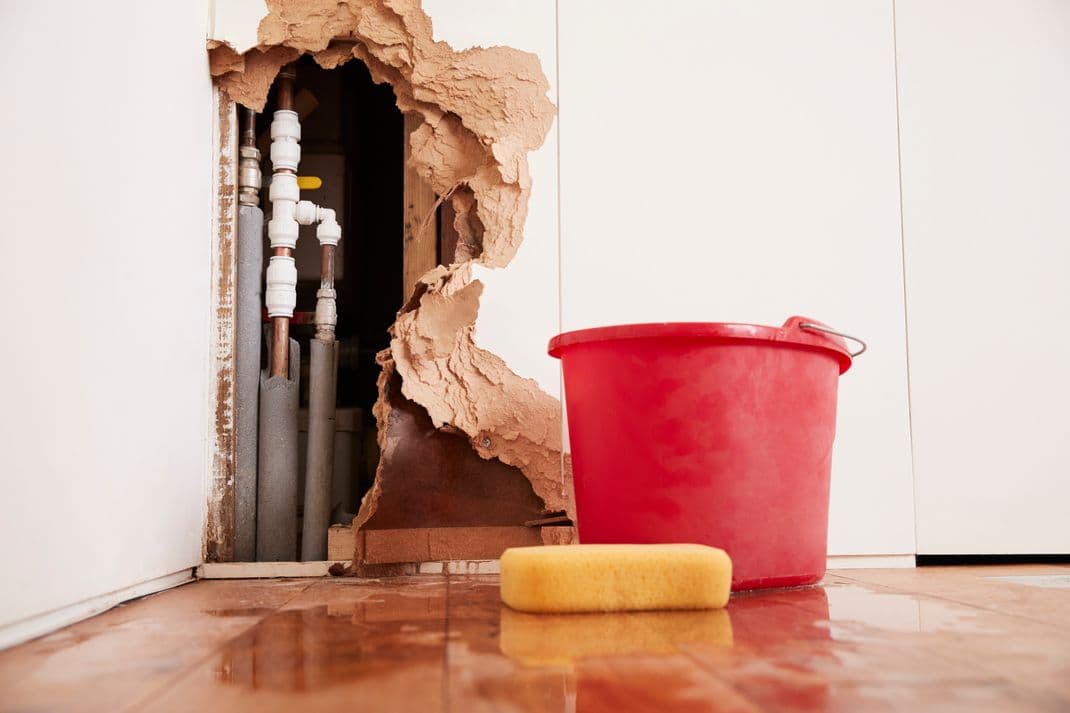
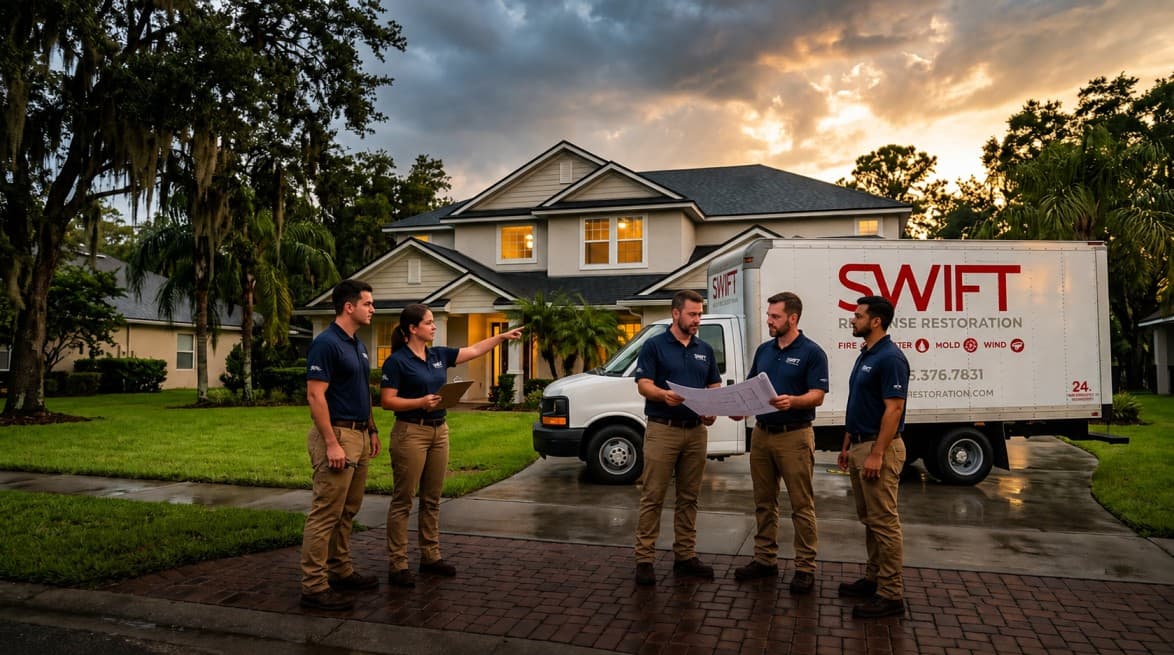
A pipe bursts overnight, a storm drives water under the door, or a water heater finally gives out while you are at work. By the time you notice, the water has already spread into places you cannot see. In South Florida’s heat and humidity, that is when the clock starts, because the EPA warns that materials left wet for more than 24 hours should be assumed to be growing mold. A water damage restoration company exists to stop that clock, dry your property fully, and put it back the way it was, often while coordinating the insurance claim so you are not paying out of pocket.
If you have never dealt with a flooded home before, the process can feel like a black box. This guide breaks down exactly what a restoration company does, how it is different from a plumber or a general contractor, and what to expect at each step, so you can act fast and choose the right help.
What is water damage restoration?
Water damage restoration is the professional process of removing water, drying a structure completely, and repairing the resulting damage so a property is safe, dry, and livable again. It is not the same as cleaning up a spill. Done correctly, it follows the IICRC S500 standard, using moisture meters, industrial drying equipment, and documented readings to prove the building is actually dry, not just dry to the touch.
Mitigation, remediation, and restoration: the difference
These three words get used interchangeably, but they describe different stages of the same job:
- Mitigation is the emergency stage: stopping the water source and extracting standing water to prevent further damage.
- Remediation is the removal of what cannot be saved and the treatment of contamination, such as mold that has already started.
- Restoration is the rebuild: replacing drywall, flooring, and finishes so the property looks and functions like it did before the loss.
A full-service company handles all three, whether the loss came from water, fire, or a storm. That matters, because a plumber can stop the leak and a handyman can hang new drywall, but neither is equipped to dry the inside of a wall cavity or verify that the moisture is gone before it is sealed up.
Why the first 24 to 48 hours decide the cost
Water does not sit still. It wicks upward through drywall, spreads sideways under flooring, and soaks into insulation that dries painfully slowly. The longer materials stay wet, the more of them have to be removed instead of dried, and the higher the risk that mold turns a water job into a health hazard.
“The size of a water loss is set in the first two days, not by the leak itself but by how fast it was dried.”
This is why reputable restoration companies answer the phone 24/7 and dispatch within hours. Speed is not a sales pitch; it is the single biggest lever on the final repair bill.
What a restoration company does, step by step
Every job is different, but a professional water damage response follows the same proven sequence:
- 1Emergency response and inspection. A crew arrives, stops the water source if it is still active, and assesses the full extent of the damage using thermal imaging and moisture meters, including the areas you cannot see.
- 2Water extraction. Powerful pumps and vacuums remove standing water fast, before it can spread further into floors and walls.
- 3Controlled demolition where needed. Unsalvageable materials, such as saturated drywall or ruined carpet padding, are removed cleanly, often with a flood cut a foot above the waterline to open wet cavities.
- 4Drying and dehumidification. Air movers and commercial dehumidifiers dry the structure over several days, with daily moisture readings tracked until the materials hit a documented dry standard.
- 5Cleaning and sanitizing. Affected areas and salvageable belongings are cleaned and treated to prevent mold and odor.
- 6Restoration and repairs. Drywall, flooring, paint, and finishes are rebuilt so the space is returned to its pre-loss condition.
What water damage restoration covers
A full-service company handles far more than a visible puddle. Typical work includes:
- Burst and leaking pipes, water heater failures, and appliance overflows, which fall into the three water damage categories restorers work from.
- Storm and flood water intrusion after hurricanes and heavy rain.
- Sewage and contaminated (black) water cleanup, which requires special handling. Ready.gov advises treating all floodwater as contaminated.
- Ceiling and wall damage from roof leaks and upstairs failures.
- Structural drying inside wall cavities, subfloors, and crawl spaces.
- Mold prevention and remediation when growth has already begun.
How restoration works with your insurance claim
Most sudden, accidental water damage, such as a burst pipe, is covered by standard homeowners policies. Gradual leaks and flooding from outside are treated differently, so coverage depends on the cause. A good restoration company does not just dry your home; it documents the loss the way insurers expect and can bill your carrier directly on covered claims, so you are not floating the cost.
- Photograph everything before cleanup begins; evidence disappears the moment work starts.
- Report the loss to your insurer promptly, as Florida policies have strict reporting windows. Note that flood is excluded from standard homeowners policies and covered separately, as Ready.gov explains.
- Keep receipts for anything you buy to limit further damage.
- Let the restoration company provide an itemized scope that matches industry pricing.
One caveat worth stating plainly: if you choose not to file, or a claim is denied, you are responsible for payment. Knowing that up front lets you make the call with clear eyes.
What to look for in a Florida restoration company
Not every company that answers a 3 a.m. call is equipped to do the job right. Before you hand over your home, look for:
- True 24/7 emergency response with a live dispatcher, not an answering service.
- Certified, trained technicians and proper containment and drying equipment.
- Moisture documentation that proves the structure is dry before it is closed up.
- Direct insurance billing and experience coordinating with adjusters.
- Local knowledge of Florida’s humidity, storm season, and building conditions.
Key takeaways
- A water damage restoration company extracts water, dries the structure, and rebuilds, all in one coordinated process.
- The first 24 to 48 hours set the size of the loss, so speed matters more than anything.
- Restoration is different from a plumber or handyman: it dries what you cannot see and proves it with readings.
- Most sudden water damage is insurable, and a good company documents the claim and can bill your insurer directly.
- Choose a certified, local company with 24/7 response and real drying equipment.
Frequently asked questions
How much does water damage restoration cost in Florida?+
Cost depends on how much water was involved, how long materials stayed wet, and how much rebuilding is needed. Acting within the first day or two keeps costs down because more materials can be dried instead of replaced. On covered insurance claims, we bill your carrier directly, so your out-of-pocket cost is often limited to your deductible.
How long does the drying process take?+
Most structural drying takes three to five days, though heavily saturated materials can take longer. We track daily moisture readings and do not stop until the structure hits a documented dry standard, rather than guessing by feel.
Is water damage covered by homeowners insurance?+
Sudden and accidental water damage, such as a burst pipe or appliance failure, is typically covered. Gradual leaks and flooding from outside are treated differently. We document the source and the damage in the format insurers expect and coordinate the claim directly.
Do I really need a professional, or can I dry it myself?+
Household fans dry surfaces, not the inside of walls, subfloors, or insulation, which is exactly where mold starts. Professional equipment and moisture verification are what prevent a small water event from becoming a mold problem weeks later.
How fast can you respond?+
We offer 24/7 emergency response with a live dispatcher and aim to have a technician on site within hours. In water damage, that speed is the single biggest factor in limiting the damage and the cost.
Dealing with this right now?
Skip the reading. A live dispatcher answers 24/7 and the inspection is free, with no obligation.
(305) 733-4134