Finding your AC leaking water inside the house is one of the most common ways Florida homeowners discover water damage, and one of the most underestimated. The puddle under the air handler is rarely the whole story: condensate has usually been dripping into the drywall, the flooring, or the closet platform for days before it shows. This guide covers what to do in the first hour, whether you can keep running the system, how mold fits in, and when the damage becomes an insurance claim.
Why is my AC leaking water inside the house?
In almost every case, the water is condensate that can no longer drain away. Your air conditioner pulls humidity out of the air, and in a Florida summer that can be gallons of water a day, all of it supposed to leave through a small condensate drain line. When that path fails, the water backs up and overflows into your home. The usual causes:
- A clogged condensate drain line. Algae, dust, and sludge build up inside the line until water backs up into the drain pan and over its edge. In Florida's heat and humidity, this is the most common cause by far.
- A rusted or cracked drain pan. Older units often leak from the pan itself even when the line is clear.
- A frozen evaporator coil. A dirty filter or low refrigerant can ice the coil over; when the ice melts, it releases more water than the pan can handle.
- A failed condensate pump or float switch. If the switch that should shut the system off when water backs up does not trip, the overflow keeps coming.
Whatever the cause, the water itself is clean supply condensate at first, which is exactly why it does so much quiet damage: there is no smell and no stain until the materials around it are already soaked.
What should I do right now?
Act the way you would for any active leak. The goal is to stop the water, then get everything dry fast.
- 1Turn the system off at the thermostat and the breaker. Running it keeps making condensate, and water near electrical components is a shock and fire hazard.
- 2Soak up the standing water with towels or a wet vacuum, and move furniture, rugs, and boxes out of the wet area.
- 3Look for where the water went, not just where it pooled. Check the wall behind the air handler, the closet platform under it, baseboards nearby, and the ceiling below if the unit is in the attic.
- 4Check the drain line and filter. If you can see an obvious clog at the outlet or a filthy filter, that is likely your cause, but have an AC technician confirm and clear the line properly.
- 5Photograph everything before cleanup, including the source. If the damage turns into a claim, the pictures of where the water came from matter as much as the pictures of the damage.
- 6Get air moving across the wet materials and run a dehumidifier if you have one.
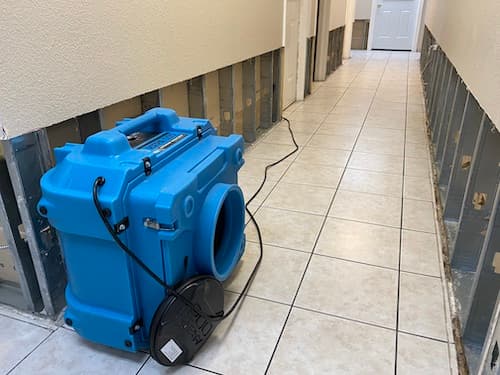
The clock that matters is the mold clock: the EPA advises drying water-damaged materials within 24 to 48 hours to prevent mold growth. Towels and a ceiling fan dry surfaces; they do not dry the inside of a wall cavity or the subfloor under vinyl plank. If the water ran for more than a few hours or reached walls or flooring, that is a job for professional drying equipment.
Can I keep running a leaking AC?
No, and not only because of the water. Running a leaking system can push the problem deeper: a frozen coil keeps shedding meltwater, an overflowing pan keeps feeding the same wall, and water around the unit's electrical components is dangerous. Shutting the system down is uncomfortable in a Florida summer, which is exactly why so many homeowners keep running a unit that is quietly flooding a wall cavity. Turn it off, get the cause fixed, and treat the hours without AC as the cheap part of the incident.
Can an AC leak really cause mold?
Yes, and it is one of the most common mold sources we see in Florida homes. An AC leak combines everything mold needs: a steady water supply, warm temperatures, and hidden surfaces. The EPA notes that mold can start on damp materials within that same 24-to-48-hour window, and a condensate leak usually runs far longer than that before anyone notices.
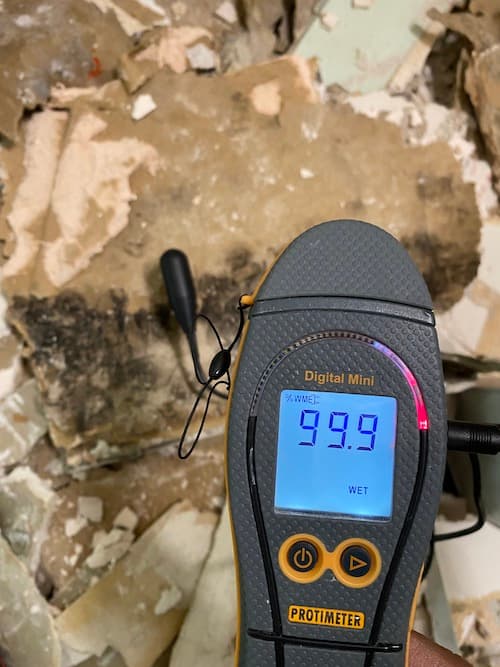
The pattern is the same one we described in our guide to mold from a slow hidden leak: the leak feeds the back of the drywall and the flooring underneath, where nothing is visible until the growth is extensive. A musty smell near the air handler, dark spots around supply vents, or warped baseboards near the AC closet are all signs the leak has been running longer than you think.
Two more numbers worth knowing. The EPA recommends keeping indoor humidity in the 30 to 60 percent range to discourage mold growth, which a struggling AC often fails to do. And once mold is established, the EPA treats anything beyond about 10 square feet as a job for professionals rather than a weekend project. In Florida, paid remediation at that scale also generally requires a licensed mold remediator, which is part of what our mold remediation team is licensed to do.
Does homeowners insurance cover AC water damage?
It depends on how the leak happened, and the distinction is the same sudden-versus-gradual line we covered in water damage vs. flood damage. In broad strokes:
- Sudden and accidental failures are typically covered: a drain pan that cracks, a float switch that fails, a condensate pump that dies and overflows in a day. The resulting damage to drywall, flooring, and cabinets is the kind of loss homeowners policies are built for.
- Gradual leaks are the problem. Many Florida policies exclude loss from constant or repeated seepage or leakage of water over a period of 14 or more days. A condensate line that has been weeping into a wall all summer can land on the wrong side of that wording.
- The AC unit itself usually is not covered. The repair to the air conditioner is a maintenance or warranty item; the policy responds to the water damage the failure caused.
- Mold coverage is often capped. Policies commonly limit mold remediation unless it resulted from a covered water loss, so the faster the leak is documented and dried, the stronger the claim.
Report promptly either way. Under Florida law, a claim is barred unless notice is given within 1 year after the date of loss, and waiting also makes it harder to prove the leak was sudden rather than gradual. Moisture readings, drying logs, and photos of the source are exactly the evidence that settles the sudden-versus-gradual question, which is why we document every job that way and bill insurers directly on covered losses.
This section is general information, not legal or insurance advice.
How do I prevent condensate leaks in Florida?
A few habits prevent most AC leaks:
- Have the system serviced before every cooling season, including the drain line being flushed and the pan and float switch checked.
- Change the air filter on schedule. A clogged filter is the cheapest problem to fix and a common path to a frozen coil.
- Pour a cup of distilled white vinegar into the condensate line's access tee every month or two during the cooling season to keep algae from establishing.
- Glance at the air handler closet or attic platform monthly, and treat any dampness, rust ring, or musty smell as a live leak until proven otherwise.
- If your air handler is in the attic, make sure the secondary drain pan under it is intact and its line is clear; it is the only thing between an overflow and your ceiling.
When should you call a restoration company?
Call an AC technician to stop the leak, and call a restoration company when the water got into materials: drywall that shows a stain or feels soft, laminate or wood flooring near the unit, a wet closet platform, or any musty smell. We check what the eye cannot with thermal imaging and moisture meters, dry the structure with commercial equipment, and document the readings so the drying is provable, the same process in our guide to what a water damage restoration company does.
If your AC has been leaking and you are not sure how far the water traveled, Swift Restoration offers a free visual assessment across our Florida service areas. Request your free visual assessment or call us, 24/7.
Frequently asked questions
Why is my AC leaking water inside the house?+
The most common cause is a clogged condensate drain line: algae and sludge block the line, the drain pan overflows, and the water spills into the surrounding wall, floor, or closet. Cracked drain pans, frozen evaporator coils, and failed condensate pumps or float switches cause the rest.
Is water leaking from the AC dangerous?+
The water itself starts clean, but it becomes a problem fast. It soaks drywall and flooring, feeds mold within 24 to 48 hours per EPA guidance, and creates a shock hazard where it reaches electrical components. Turn the system off and dry the area rather than waiting to see if it stops.
Can I run my AC while it is leaking?+
No. Running it keeps producing condensate, keeps feeding the leak, and can worsen the fault that caused it, such as a frozen coil. Shut it down at the thermostat and breaker until the cause is found and fixed.
How long does it take for mold to grow after an AC leak?+
Mold can begin growing on damp materials within 24 to 48 hours, according to the EPA. Because condensate leaks often run for days or weeks before they are noticed, mold is a realistic assumption rather than a worst case, especially inside the wall or under flooring where the water went first.
Does homeowners insurance cover water damage from an AC leak?+
Often yes for sudden failures, such as a cracked drain pan or a pump that dies and overflows quickly. Gradual leaks are frequently excluded under seepage wording, and the AC repair itself is usually a maintenance item. Document the source before cleanup and report the loss promptly.
Will insurance pay for mold caused by my AC?+
Sometimes, within limits. Mold coverage is commonly capped and usually applies only when the mold resulted from a covered water loss. Fast drying, moisture documentation, and prompt reporting all strengthen that position.
How do I know if the leak reached inside the wall?+
Signs include a musty smell near the air handler, bubbling or stained paint, soft or warped baseboards, and dark spots around nearby vents. The reliable answer comes from a moisture meter or thermal camera, which is part of what a professional assessment checks without opening the wall.
Who fixes what: the AC company or the restoration company?+
The AC technician finds and fixes the cause: the clog, pan, coil, or pump. The restoration company handles what the water did: extracting, drying the structure to documented standards, and remediating any mold. On larger losses the two work in parallel so the home is dry as soon as the leak is stopped.
Dealing with this right now?
Skip the reading. A live dispatcher answers 24/7 and the visual assessment is free, with no obligation.
(305) 733-4134